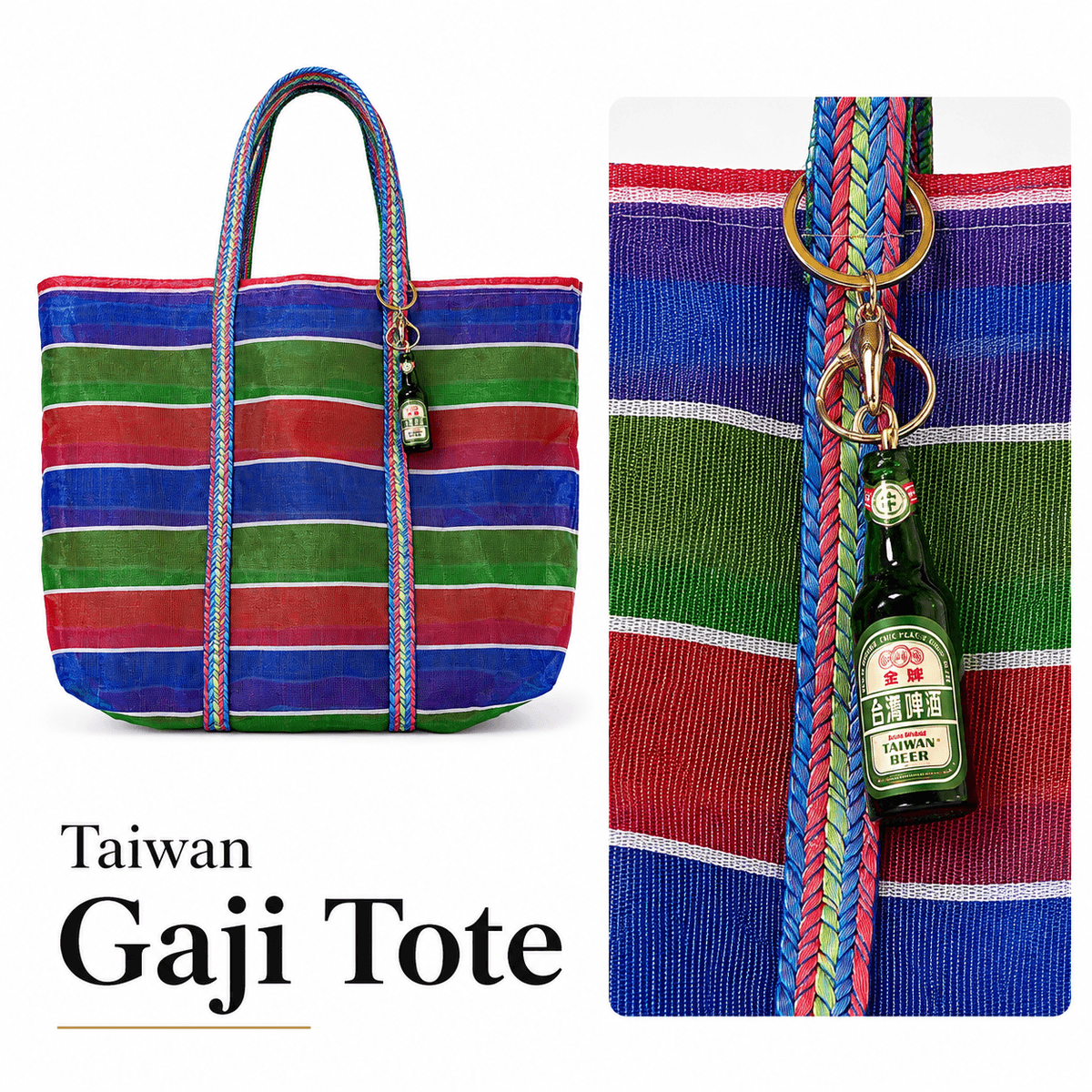
This spring I came home from Taiwan with a suitcase full of gaji totes — and I couldn't be more excited to share them with you. For our September You Give We Gift campaign, every donor who gives $30 or more will take home one of these beautiful, one-of-a-kind bags as our thank-you gift.
But first, let me tell you why this humble bag is anything but ordinary.
The gaji bag (茄芷袋) traces its roots to Jingliao, a farming village in Tainan, during Taiwan's Japanese colonial era in the early twentieth century. Rice farmers wove the original bags by hand from triangle rush — a tough marsh sedge — to earn extra income between harvests. Sturdy, breathable, and sun-resistant, the bags became a fixture of everyday rural life, carrying seeds to the fields and groceries home from the market.
When Taiwan industrialized in the 1960s, production shifted to machine-sewn nylon mesh in the now-iconic red, green, and blue stripes. The gaji bag became the workhorse of every Taiwanese household — the bag your grandmother took to the wet market, earning it the affectionate nickname "the grandma bag."
And then something wonderful happened. In the 2000s, a documentary about Jingliao's farmers rekindled national affection for the bag, celebrities adopted it, and designers reimagined it in new colors and styles. Today the gaji tote has strutted into international fashion shows and earned a cheekier nickname: "the Taiwan LV." All the icon, none of the price tag.
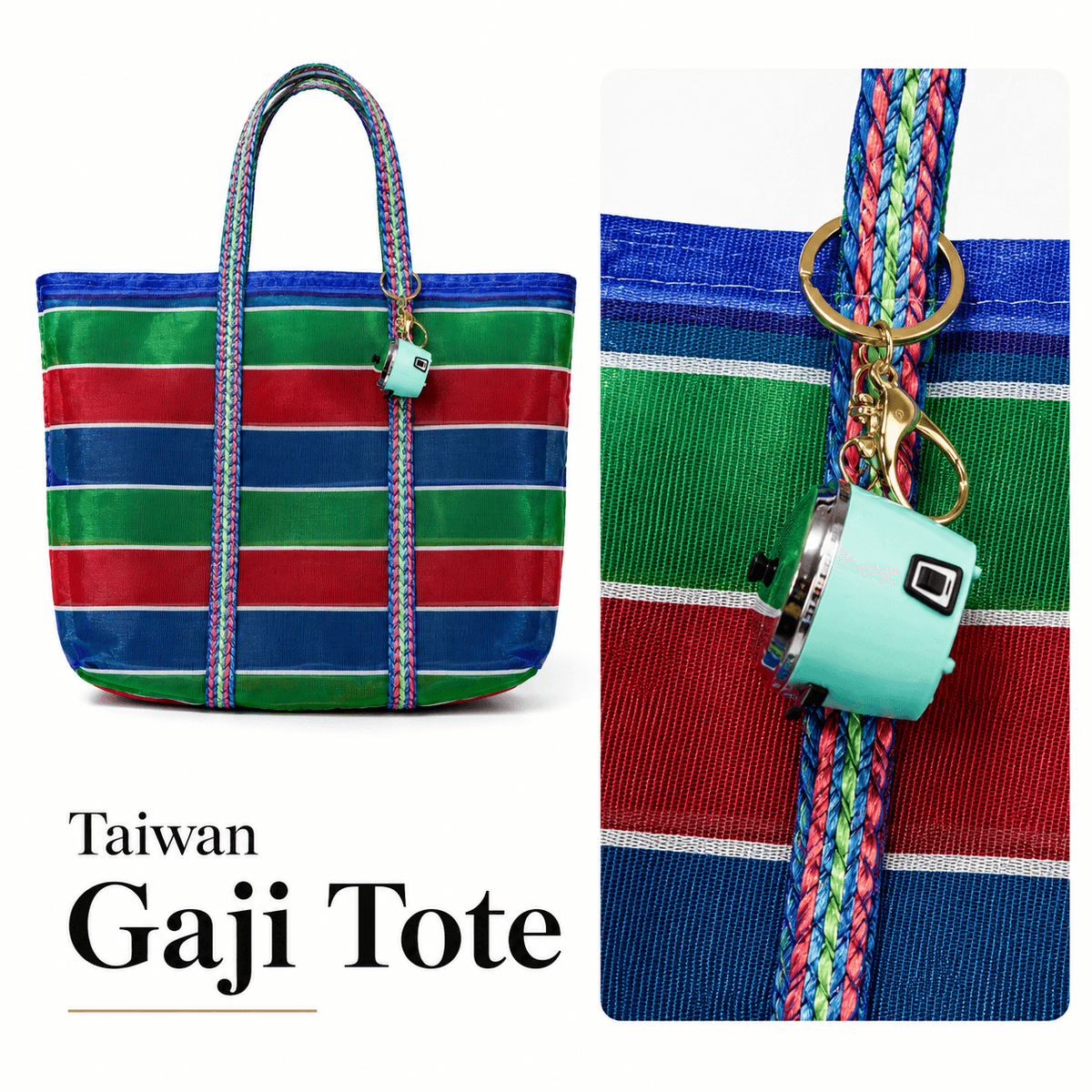
One of a Kind — Really
The totes I brought back come in gorgeous colorways. But I didn't stop there. I hand-decorated each one with charms and keyrings celebrating classic Taiwanese icons — like the beloved neon-green fly swatter found in every Taiwanese home, and other little pieces of island nostalgia. No two bags are alike, and several designs exist in a quantity of exactly one. When you choose yours, you're choosing a tote that exists nowhere else in the world.
Built to Be Used, Again and Again
Gaji totes are made of tightly woven nylon mesh, and that's their superpower. They're feather-light but remarkably strong, water-resistant, easy to rinse clean, and nearly indestructible — this is a design that survived decades of daily hauling in markets and rice paddies. Fold one flat and tuck it into your purse or glovebox, and you'll never be caught without a bag again. Every trip it takes to the grocery store or farmers market is one more single-use plastic bag that never gets made.
For those of us in the Taiwanese and Taiwanese American community, the gaji bag is more than an accessory — it's a piece of home you can carry on your shoulder. It's the market mornings of our childhoods, the resourcefulness of our grandparents, and the joyful, unpretentious spirit of Taiwan itself. Carry one and you'll be surprised how often it starts a conversation.
Where Every Dollar Goes
Here's the part that matters most: 100% of the money raised goes to SY Collective's chief cause, the Seattle Children's Hospital Uncompensated Care Fund. Seattle Children's treats every child who comes through its doors, regardless of a family's ability to pay — and in fiscal year 2025 alone, the hospital provided over $272 million in care that was never compensated. Your $30 helps close that gap for a family facing the unthinkable, so they can focus on their child instead of a bill.
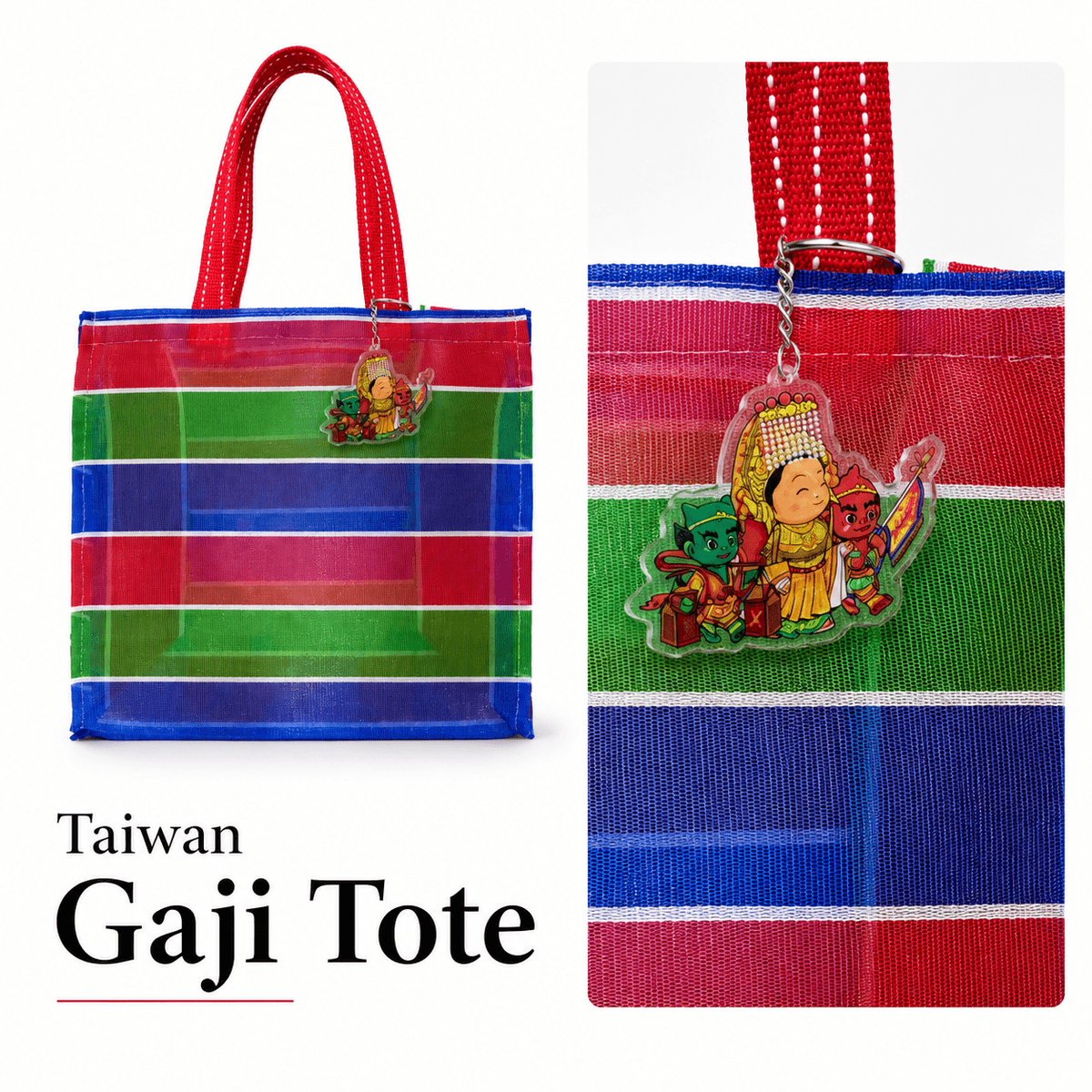
Meet Us at the Market — One Day Only
SY Collective doesn't have a office or storefront, so chances to meet our local Taiwanese community face to face are rare — which is why we're thrilled to be invited to the Crossroads Farmers Market as a community partner for one special day:
Tuesday, September 8 · 12:00 pm – 6:00 pm
Come say hello, browse the collection, and pick out the tote that speaks to you. A friendly warning: some designs are one quantity only, so come early for the best selection. Once a tote finds its person, it's gone for good.
You give. We gift. Everybody wins — especially the kids.
今年春天,我從台灣帶回了滿滿一行李箱的茄芷袋,迫不及待想與大家分享。在九月的 You Give We Gift 活動中,凡捐款 30 美元以上,即可親自挑選一款獨一無二的茄芷袋,作為我們的謝禮。
先讓我說說,這個看似平凡的袋子,為什麼一點也不平凡。
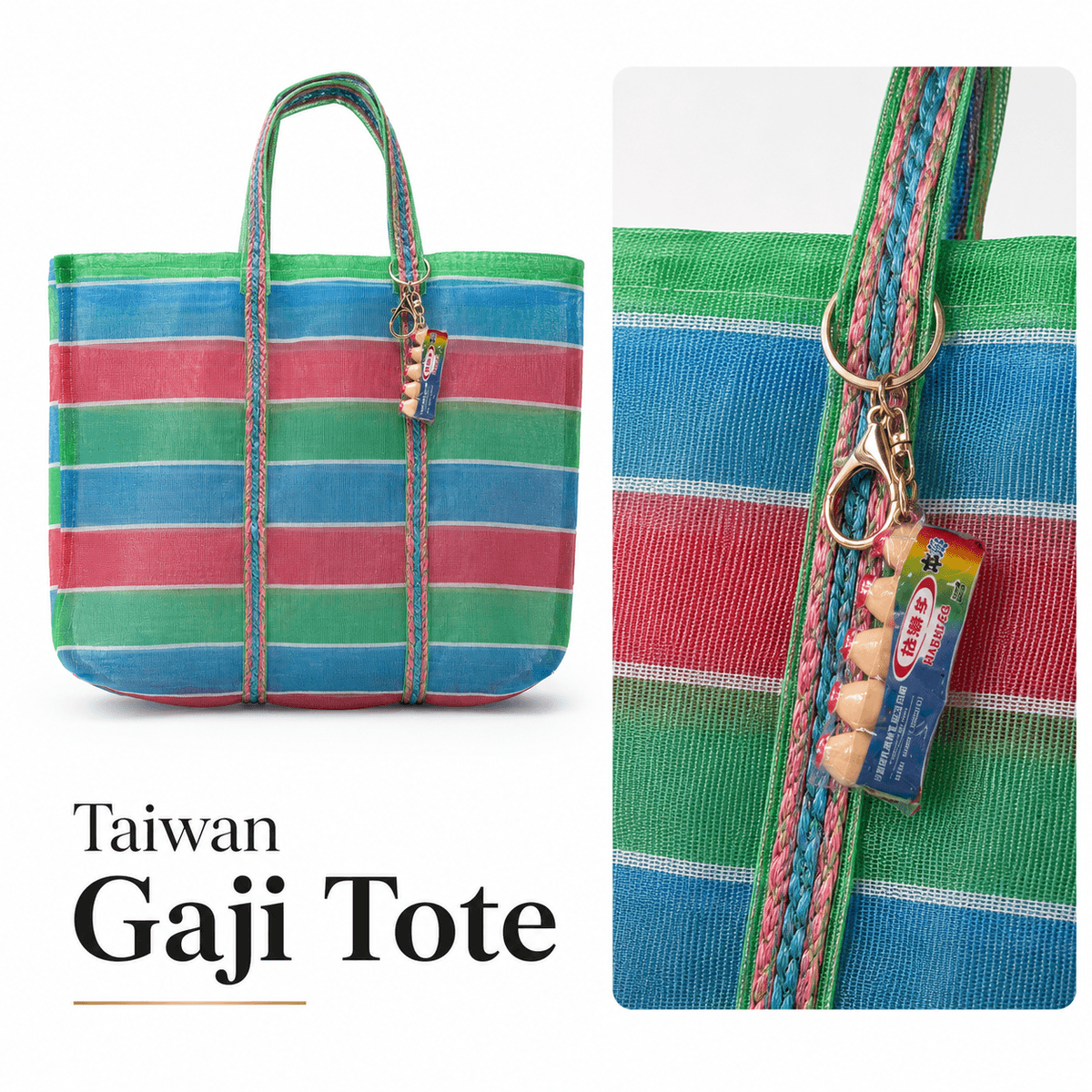
茄芷袋發源於日治時期的台南後壁菁寮。當年的稻農在農閒時以三角藺草手工編織袋子貼補家用;藺草編成的袋子堅韌、透氣、耐曬,陪著台灣人下田、上市場,走過大半個世紀。
1960 年代台灣工業起飛,茄芷袋改以尼龍網布機縫製作,紅、綠、藍三色條紋從此成為經典,也成了阿公阿嬤菜籃裡最熟悉的風景。2000 年代,紀錄片《無米樂》讓菁寮農民的故事感動全台,茄芷袋重新翻紅——設計師賦予它新色彩、新樣貌,一路走上國際時尚舞台,贏得「台灣 LV」的美名。經典依舊,價格親民。
獨一無二,名副其實
這次帶回的茄芷袋有多種美麗配色。我還親手為每一個袋子加上經典台灣小物的吊飾與鑰匙圈——比如家家戶戶必備的螢光綠蒼蠅拍,還有其他充滿古早味的小物。每一個都不一樣,有些款式更是全球僅此一件。您挑中的那款,世界上再也找不到第二個。
耐用環保,越用越有味
茄芷袋以緊密編織的尼龍網布製成:輕巧卻極為堅固、防潑水、好清洗,幾乎用不壞——畢竟這是在菜市場和稻田裡經過數十年考驗的設計。摺起來塞進包包或車上,隨時派上用場;每用一次,就少用一個塑膠袋。
把台灣的驕傲背在肩上
對海外的台灣人來說,茄芷袋不只是袋子,更是一份可以背在肩上的鄉愁。它是童年清晨的菜市場,是阿公阿嬤的惜物智慧,也是台灣人樂天、實在的精神。背著它出門,您會驚訝有多少人主動跟您聊起台灣。
每一分錢的去向
最重要的是:募得款項將全數捐給善育功德會長期支持的西雅圖兒童醫院(Seattle Children's Hospital)Uncompensated Care Fund(無償醫療基金)。西雅圖兒童醫院秉持「不因家庭經濟狀況拒收任何病童」的信念——光是 2025 會計年度,醫院就提供了超過 2.72 億美元無償償的醫療服務。您的 30 美元,能實實在在地幫助一個正面臨困境的家庭,讓他們專心陪伴孩子,而不是煩惱帳單。
小農市集見——就一天!
善育功德會沒有實體辦公室或店面,能與西雅圖在地台灣鄉親面對面的機會十分難得。這次我們很榮幸受邀以社區夥伴的身分,參加 Crossroads Farmers Market:
9 月 8 日(星期二)中午 12 點至下午 6 點
歡迎來攤位跟我們聊聊天,挑選您最喜歡的茄芷袋。溫馨提醒:部分款式僅有一件,請早到現場,先搶先贏——袋子找到主人後,就不再有了。
You give. We gift. 最大的贏家,是孩子們。